
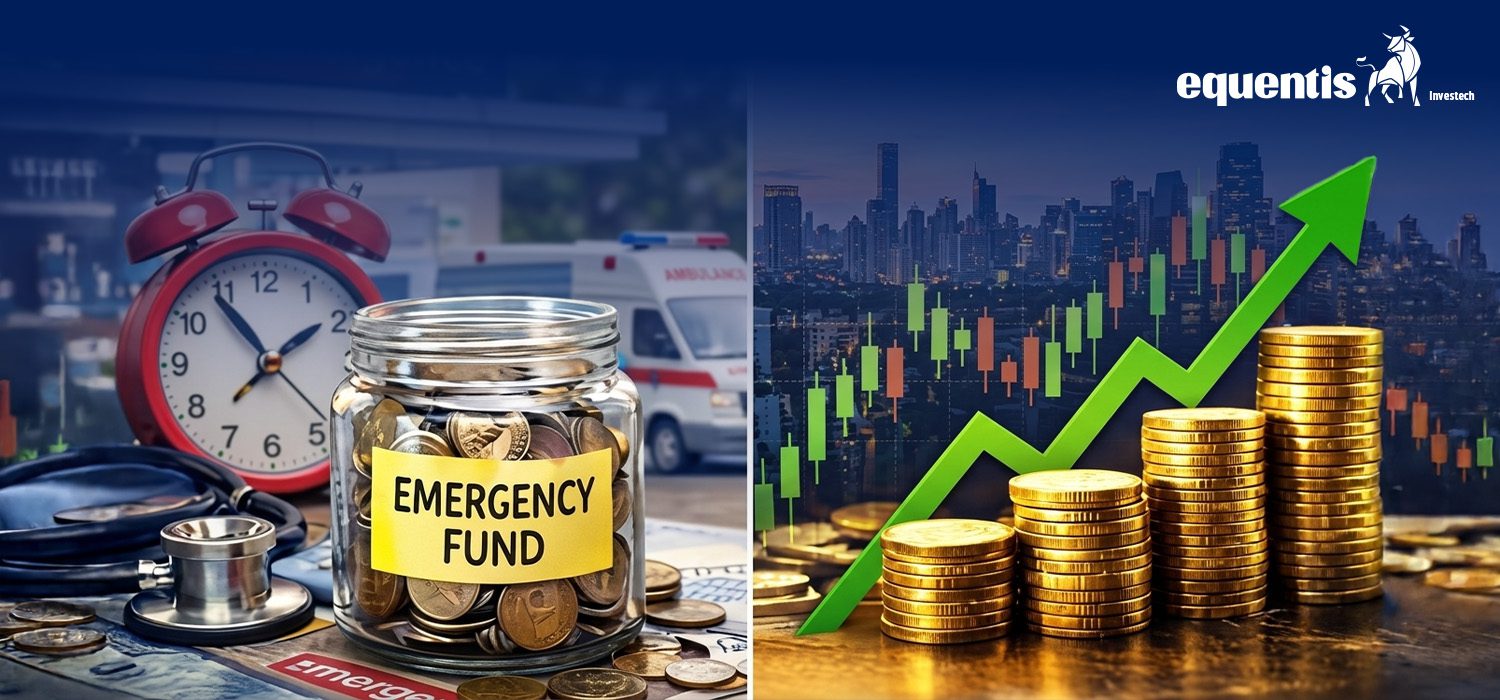
Managing money is not just about growing your wealth. It is also about protecting yourself from unexpected expenses. While investments help you build wealth over time, an emergency fund ensures you have money available when life takes an unexpected turn.
A medical emergency, sudden job loss, urgent home repair, or an unexpected family expense can disrupt even a well-planned budget. Without sufficient savings, you may have to sell investments at the wrong time or rely on credit cards and personal loans.
So, how much money should you keep aside as cash? Should you prioritise building an emergency fund or start investing as early as possible? The answer depends on your income, monthly expenses, financial responsibilities, and long-term goals.
Let’s understand how to strike the right balance between financial security and wealth creation.
What Is an Emergency Fund?
An emergency fund is money set aside specifically for unexpected and essential expenses. Unlike investments meant for long-term growth, this money should be easily accessible when you need it.
The primary purpose of an emergency fund is to help you manage financial setbacks without disturbing your investments or taking on unnecessary debt.
For example, if you lose your job, an emergency fund can help cover your rent, groceries, utility bills, insurance premiums, and other essential expenses while you look for another opportunity.
Common situations where an emergency fund can help include:
- Unexpected medical expenses not covered by insurance.
- Job loss or a temporary loss of income.
- Urgent home or vehicle repairs.
- Essential family expenses.
- Unexpected bills that cannot be postponed.
An emergency fund is not meant for planned purchases, holidays, shopping, or regular lifestyle expenses. Those should be covered through separate savings goals.
What Are Investments, and Why Do They Matter?
Investments are financial assets purchased with the expectation of generating returns or growing in value over time. They help you work towards long-term goals such as buying a house, funding higher education, or building a retirement corpus.
Depending on your risk tolerance and financial objectives, investments may include mutual funds, stocks, bonds, fixed deposits, and other financial instruments.
Unlike an emergency fund, many investments can fluctuate in value. Equity mutual funds and stocks, for instance, may experience market declines just when you need money.
Investments also serve a different purpose from savings. While savings provide financial stability and liquidity, investments are generally intended to help your money grow over a longer period.
That is why it is important to build a financial safety net before committing all your surplus money to investments.
Emergency Fund vs Investments: Key Differences
| Factor | Emergency Fund | Investments |
|---|---|---|
| Primary purpose | Financial protection | Wealth creation |
| Accessibility | Should be readily available | Depends on the asset |
| Risk | Prioritises capital preservation | Varies by investment |
| Returns | Usually modest | Potentially higher, with varying risk |
| Time horizon | Immediate needs and short-term emergencies | Medium- to long-term goals |
| Examples | Savings accounts, sweep-in deposits, suitable short-term deposits | Equity mutual funds, stocks, bonds, long-term deposits |
The key difference is that an emergency fund prioritises availability and stability, while investments focus on achieving financial goals over time.
Both are important, but they should not be treated as interchangeable.
How Much Money Should You Keep in an Emergency Fund?
A widely used guideline is to maintain three to six months of essential living expenses in an emergency fund. However, the right amount depends on your personal circumstances.
If you have a stable job, limited financial responsibilities, and adequate insurance, three months of essential expenses may be a reasonable initial target.
If you are self-employed, work on contracts, have dependants, or support family members financially, aiming for six to twelve months of essential expenses may provide greater security.
Here is an example of how to calculate your emergency fund.
| Monthly essential expenses | 3-month fund | 6-month fund |
|---|---|---|
| ₹20,000 | ₹60,000 | ₹1,20,000 |
| ₹30,000 | ₹90,000 | ₹1,80,000 |
| ₹40,000 | ₹1,20,000 | ₹2,40,000 |
| ₹50,000 | ₹1,50,000 | ₹3,00,000 |
| ₹60,000 | ₹1,80,000 | ₹3,60,000 |
These are illustrative calculations. Your actual target should reflect your essential expenses and financial responsibilities.
When calculating your emergency fund, include rent or home-loan payments, groceries, electricity, transport, insurance premiums, essential medical expenses, minimum debt repayments, and dependent family members’ expenses.
Exclude discretionary spending such as dining out, entertainment, shopping, and holidays.
Where Should You Keep Your Emergency Fund?
Your emergency fund should be accessible without exposing the money to unnecessary market risk. Keeping the entire amount in a long-term investment or an asset that takes time to liquidate can defeat its purpose.
Consider dividing your emergency savings across suitable options.
1. Savings Account
A savings account offers easy access to your money and is useful for expenses that require immediate payment.
Keep enough money here to handle urgent bills, short-term cash-flow gaps, and other immediate needs. Compare interest rates, minimum-balance requirements, withdrawal facilities, and applicable bank deposit protections.
2. Sweep-In Fixed Deposits
Some banks offer sweep-in facilities that link a savings account to a fixed deposit. When the account balance falls below a specified threshold, funds can be transferred automatically from the deposit.
This can help you earn more interest on money you do not need immediately while retaining access to funds, subject to the bank’s terms.
3. Short-Term Fixed Deposits
A portion of your emergency fund may be kept in suitable short-term fixed deposits if their maturity terms and premature-withdrawal conditions fit your needs.
Avoid locking away money that you may need urgently.
What About Mutual Funds?
Liquid funds and other low-duration debt funds are sometimes used for short-term cash management. However, they are market-linked, are not equivalent to bank deposits, and do not guarantee capital or immediate redemption in every circumstance.
Your core emergency reserve should prioritise reliability and access over maximising returns.
Should You Build an Emergency Fund Before Investing?
For most people, building a basic emergency fund before increasing investments is a sensible approach. However, you do not necessarily have to postpone every investment until you have saved six months of expenses.
A balanced approach can help you establish financial security while developing consistent investing habits.
Consider following these steps:
- Start with a starter emergency fund. Build enough savings to handle a smaller unexpected expense without borrowing.
- Pay attention to high-interest debt. Credit card balances and expensive personal loans can undermine your financial progress. Create a repayment plan while maintaining a basic cash reserve.
- Build your emergency fund towards three to six months of expenses. Increase your target if your income is irregular or your responsibilities are higher.
- Start or continue suitable long-term investments. Once you have a basic financial cushion, consider investing according to your goals, risk tolerance, and time horizon.
- Review your financial position regularly. Replenish your emergency fund after withdrawals and adjust it when your expenses or responsibilities change.
The goal is not to choose between saving and investing forever. It is to give each rupee a clear purpose.
How to Balance Your Emergency Fund and Investments
The right balance depends on how much financial security you already have.
If You Have No Emergency Savings
Prioritise building a basic cash reserve. Start with a manageable monthly contribution and gradually increase it.
You can also review discretionary spending, negotiate recurring expenses, and direct occasional bonuses or additional income towards your savings target.
If You Have a Partial Emergency Fund
Continue adding to your emergency savings while considering modest, appropriate long-term investments. The split will depend on your income stability, debt, insurance coverage, and how much you have already saved.
If You Have a Fully Funded Emergency Reserve
Once you have an adequate emergency fund, additional money may be directed towards investments that support your financial goals.
This could include retirement planning, diversified mutual funds, or other suitable assets, depending on your time horizon and risk tolerance.
Avoid keeping every rupee in cash indefinitely if your long-term goals require growth. Inflation can gradually reduce the purchasing power of money that earns insufficient returns.
Common Mistakes to Avoid
Even people who save regularly can make mistakes when managing emergency funds and investments.
1. Investing all your surplus money: Putting every spare rupee into market-linked assets can leave you financially vulnerable when unexpected expenses arise.
2. Keeping too much money in low-return accounts: An excessively large cash reserve may slow long-term wealth creation. Set a target based on your actual needs rather than accumulating cash without a clear purpose.
3. Treating credit cards as an emergency fund: Credit can provide temporary flexibility, but borrowing during a financial setback may create expensive repayment obligations.
4. Ignoring insurance: An emergency fund is not a substitute for appropriate health, life, or other insurance coverage. Insurance can help protect your savings from certain large financial shocks.
5. Forgetting to replenish withdrawals: If you use your emergency fund, make rebuilding it a priority once your finances stabilise.
6. Taking unnecessary risks with emergency savings: Avoid exposing money needed for essential expenses to volatile investments simply to pursue higher returns.
Final Thoughts
An emergency fund and investments serve two different but equally important purposes. Your emergency fund protects your present, while your investments help you prepare for the future.
For many people, maintaining three to six months of essential expenses in accessible, relatively low-risk savings is a practical starting point. Those with irregular incomes or greater financial responsibilities may need a larger reserve.
Once you have established an adequate safety net, you can focus more confidently on long-term wealth creation.
Ultimately, financial planning is not about keeping every rupee in cash or investing everything you earn. It is about maintaining enough liquidity to handle life’s uncertainties while allowing the rest of your money to work towards your goals.
The best financial strategy is one that helps you manage unexpected expenses today without compromising your financial future.


