
Introduction
Your financial goals change as you grow older. In your 20s, you may focus on building your career, starting to invest, and saving for major purchases. By your 30s and 40s, responsibilities such as buying a house, raising a family, and planning for your children’s education may become more important. Later in life, protecting your savings and generating a steady income often take priority.
Your investment portfolio should evolve alongside these changing needs. This is where asset allocation by life stage becomes important.
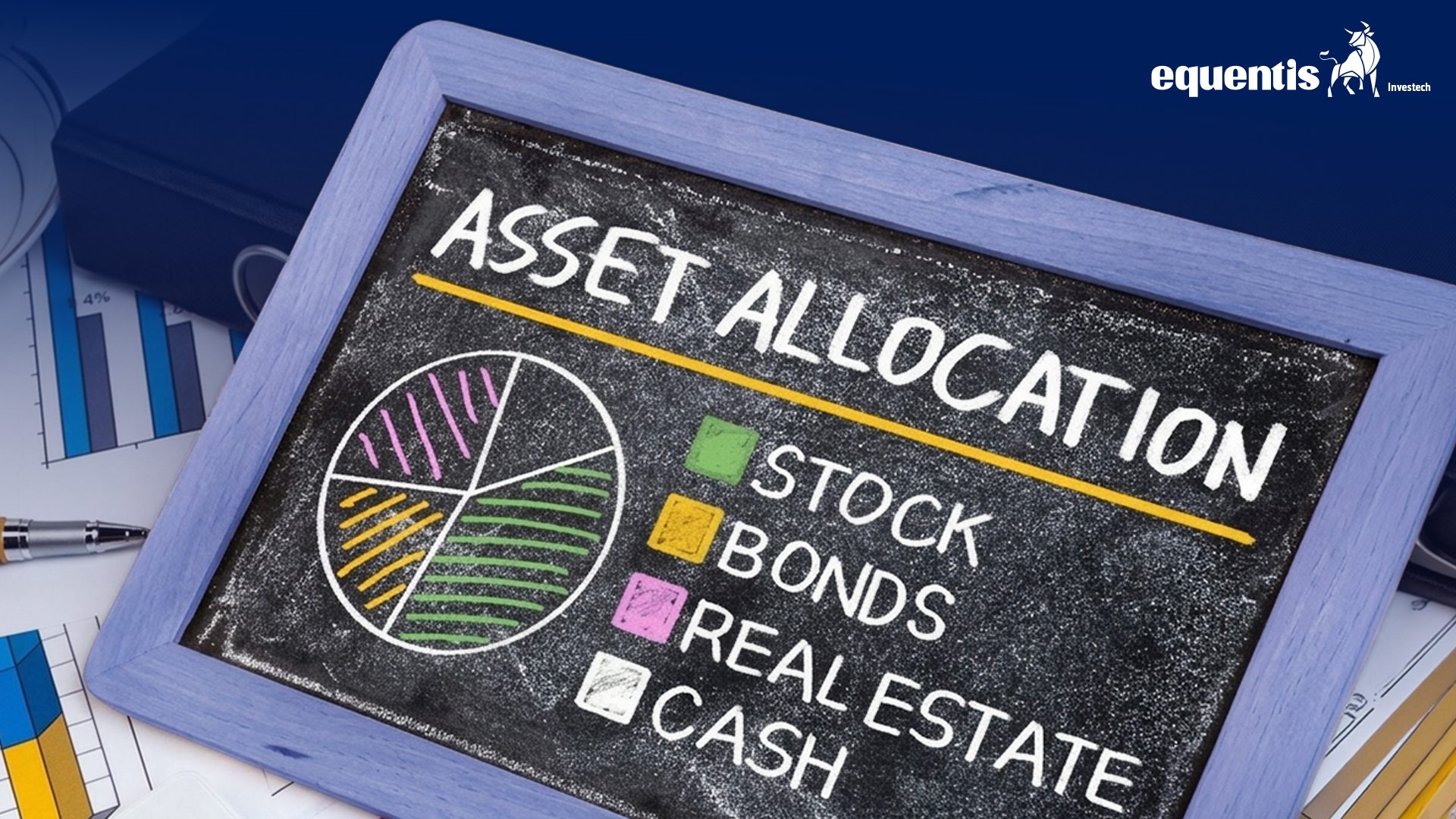
Asset allocation refers to how you divide your investments across different asset classes, such as equity, debt, gold, and cash. The right mix depends on your financial goals, investment horizon, income stability, and ability to handle market fluctuations.
Let’s understand how your portfolio can change at different stages of life and what you should consider before adjusting your investments.
What Is Asset Allocation?
Asset allocation is the process of distributing your investment money across different types of assets to balance risk and potential returns.
For example, equity investments, such as stocks and equity mutual funds, offer long-term growth potential but can experience significant short-term volatility. Debt investments, such as fixed deposits, bonds, and debt mutual funds, can provide relatively greater stability, depending on the instrument and its risks. Gold can offer diversification, while cash and liquid investments help meet short-term financial needs.
A portfolio containing different asset classes may be better positioned to handle changing market conditions than one concentrated in a single investment category. However, diversification does not guarantee profits or eliminate the possibility of losses.
The goal is not to find one perfect allocation that works forever. It is to create a portfolio that supports your financial goals while accounting for the risks you can reasonably afford to take.
Why Asset Allocation Changes With Age
Age is an important consideration when planning investments, but it should not be the only deciding factor.
Three factors generally influence your asset allocation.
Investment horizon: If you need your money in the next two years, you may not want to expose it to the same level of market volatility as money intended for retirement several decades away.
Risk tolerance: Some investors are comfortable seeing their portfolios fluctuate, while others may struggle with even moderate losses. Your allocation should reflect your ability to stay invested during difficult markets.
Financial responsibilities: A person with a stable income, manageable expenses, and no dependants may have more flexibility to invest for long-term growth than someone managing substantial debt or several household responsibilities.
As these factors change, your portfolio may need to change as well.
Asset Allocation in Your 20s: Focus on Building Wealth
Your 20s can be a valuable period for long-term investing because you may have several decades before retirement. Starting early also gives your investments more time to benefit from compounding.
Compounding occurs when your investment returns generate additional returns over time. The longer you remain invested, the greater the opportunity for this effect to contribute to wealth creation, although actual returns are never guaranteed.
At this stage, investors with a stable income, an emergency fund, and a long investment horizon may consider allocating a larger share of their long-term portfolio to equity.
For example, an illustrative allocation could include 70% equity, 20% debt, and 10% gold or other diversifying assets. This is only an example, not a recommendation for every investor in their 20s.
Before investing aggressively, build an emergency fund that can cover essential expenses for several months. Pay attention to high-interest debt and ensure that money needed for near-term goals is not exposed to unnecessary market risk.
The key priority in your 20s is to establish consistent investing habits without compromising your financial security.
Asset Allocation in Your 30s: Balance Growth With Responsibilities
Your 30s may bring higher earnings, but they can also bring larger financial commitments. Buying a home, supporting dependants, planning for children, or managing a home loan can change how much risk you can comfortably take.
You may still have a long investment horizon for retirement, so equity can continue to play an important role in your portfolio. However, money intended for goals approaching in the next few years may need a more stable allocation.
An illustrative portfolio could contain 60% equity, 30% debt, and 10% gold or other diversifying assets.
The exact allocation depends on your circumstances. Someone with substantial savings, a stable income, and retirement several decades away may choose a higher equity allocation. Someone with an upcoming home purchase or uncertain income may prefer greater stability.
At this stage, separate your investments according to their purpose. Retirement savings, a house deposit, children’s education, and emergency reserves have different timelines and should not necessarily follow the same investment strategy.
Asset Allocation in Your 40s: Strengthen Financial Stability
In your 40s, you may have accumulated meaningful investments and built a more established career. At the same time, your financial responsibilities may be at their peak.
Retirement is closer than it was in your 20s, and education expenses, loan repayments, or family commitments may compete with long-term wealth creation.
Your portfolio should continue to pursue growth while paying greater attention to capital preservation and upcoming financial needs.
An illustrative allocation could be 50% equity, 40% debt, and 10% gold or other diversifying assets.
However, reducing equity simply because you have reached your 40s is not always necessary. If retirement is still 20 years away, a portfolio that becomes too conservative may struggle to keep pace with inflation.
Instead, review whether your investments are aligned with your expected retirement date, future expenses, and financial obligations. You can gradually reduce exposure to market volatility for goals that are approaching while retaining suitable growth investments for longer-term needs.
Asset Allocation in Your 50s: Prepare for Retirement
Your 50s are often a transition period between earning an income and relying more heavily on accumulated wealth.
At this stage, a major market decline shortly before retirement can have a significant impact, particularly if you need to withdraw money while your investments are falling.
This makes liquidity, diversification, and withdrawal planning increasingly important.
An illustrative allocation could be 40% equity, 50% debt, and 10% gold or other diversifying assets.
This does not mean every investor should follow this exact mix. Someone with a pension, substantial savings, and other reliable income sources may be able to tolerate more equity exposure. Someone depending entirely on their portfolio may need a different balance.
Start estimating your retirement expenses, including healthcare, housing, travel, and everyday living costs. Consider how much income you may receive from pensions or other sources and how much will need to come from your investments.
Money required during the first few years of retirement should generally be managed differently from money intended to support you over the following 20 or 30 years.
Asset Allocation After 60: Prioritise Income, Liquidity, and Longevity
After retirement, your portfolio may need to support regular withdrawals instead of relying on salary contributions.
This changes the role of your investments. Stability and liquidity become more important, but completely avoiding equity can also create risks. Retirement can last several decades, and inflation may gradually reduce the purchasing power of money held entirely in low-return assets.
An illustrative allocation could be 25% equity, 65% debt, and 10% gold or other diversifying assets.
The appropriate mix depends on your retirement income, savings, health expenses, dependants, and expected lifespan. Investors with limited guaranteed income may require a different approach from those whose essential expenses are already covered by a pension.
Keep enough accessible money for planned expenses and unexpected needs. Choose debt instruments carefully because they can carry credit, interest-rate, and reinvestment risks. Equity may continue to support long-term growth, provided the allocation matches your financial situation and tolerance for losses.
The objective is to make your savings last while maintaining a reasonable balance between income, stability, and growth.
Illustrative Asset Allocation by Life Stage
The following table summarises one possible progression. These percentages are examples for understanding the concept, not universal age-based rules.
| Life stage | Equity | Debt | Gold or other diversifiers |
|---|---|---|---|
| 20s | 70% | 20% | 10% |
| 30s | 60% | 30% | 10% |
| 40s | 50% | 40% | 10% |
| 50s | 40% | 50% | 10% |
| After 60 | 25% | 65% | 10% |
Actual allocations should reflect your goals, time horizon, income security, existing assets, and risk tolerance. Gold and other diversifying assets can fluctuate in value and should not automatically be treated as substitutes for emergency cash or stable income.
Common Asset Allocation Mistakes to Avoid
Even investors who understand diversification can make mistakes when managing their portfolios.
Following age-based rules blindly: Two people of the same age may have very different financial circumstances. Your portfolio should reflect your actual needs rather than an arbitrary age-based formula.
Taking excessive risk with short-term money: Equity investments can fall sharply over short periods. Money needed soon for tuition, a house purchase, or other essential expenses should generally be managed with that shorter time horizon in mind.
Becoming too conservative too early: Moving almost entirely into low-growth assets can make it harder to meet long-term goals, particularly when inflation is considered.
Ignoring inflation: A portfolio that preserves its nominal value may still lose purchasing power over time. Long-term investors need to consider the effect of rising costs on their future expenses.
Failing to rebalance: Market movements can cause your portfolio to drift away from its intended allocation. For example, a strong equity rally may increase the share of stocks in your portfolio beyond your original target.
Review your allocation periodically and consider rebalancing when it moves meaningfully away from your plan. This may involve redirecting new investments or selling a portion of an asset that has grown beyond its intended share. Account for taxes, fees, and applicable investment rules before making changes.
How to Review Your Asset Allocation
A practical review does not require you to constantly monitor the market or make frequent portfolio changes.
Start by listing your financial goals and the approximate date when you expect to need the money. Separate short-term needs from long-term objectives, then review your current investments to understand your exposure to equity, debt, gold, and cash.
Next, consider how much financial loss you could tolerate without abandoning your investment plan. Review your emergency savings, outstanding loans, income stability, and any major expenses expected in the coming years.
Finally, compare your current portfolio with your intended allocation. If your circumstances have changed, update your plan. If the allocation has drifted because of market movements, consider whether rebalancing is appropriate.
An annual review may be sufficient for many long-term investors, although major life events such as marriage, a home purchase, a career change, or retirement may justify an earlier review.
Conclusion
Asset allocation by life stage is about adapting your investment strategy as your financial goals, responsibilities, and investment horizon change.
Your 20s may offer greater flexibility to pursue long-term growth. Your 30s and 40s may require a balance between wealth creation and growing responsibilities. Your 50s and retirement years may place greater emphasis on liquidity, stability, and a sustainable withdrawal strategy.
However, age alone should never determine your investment decisions. The right portfolio is one that reflects your personal circumstances, supports your financial goals, and allows you to stay committed to your plan through different market conditions.
Review your investments periodically, maintain appropriate emergency savings, and adjust your allocation when your needs change. A thoughtful, flexible strategy can help you work towards financial security throughout your life.
Disclaimer: This article is for educational purposes only and should not be considered personalised investment advice. Investments are subject to market risks. Consider your financial circumstances and consult a qualified financial adviser before making investment decisions.


