
For investors seeking regular cash flow and greater stability, bonds have long been a cornerstone of income-focused portfolios. However, one of the biggest challenges in fixed-income investing is managing interest rate risk.
Investing all your money in a single bond or locking into one maturity period can expose your portfolio to changing market conditions.
A bond laddering strategy offers a practical solution by combining predictable income with flexibility and risk management.
What Is a Bond Ladder?
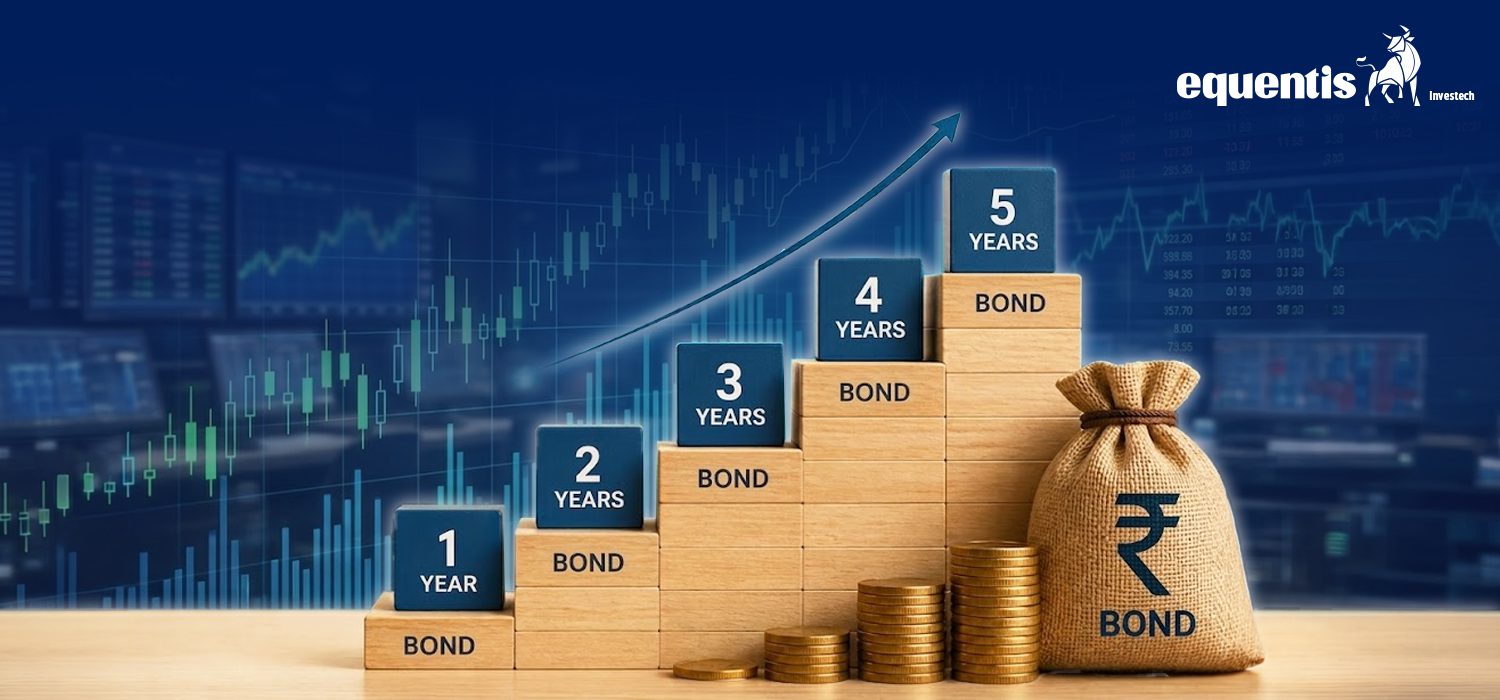
A bond ladder is an investment strategy that involves purchasing multiple bonds with staggered maturity dates.
Instead of investing a lump sum into a single bond, you spread your investments across bonds that mature at different intervals.
For example, an investor with ₹50 lakh might create a five-year bond ladder by allocating ₹10 lakh each to bonds maturing in:
- Year 1
- Year 2
- Year 3
- Year 4
- Year 5
As each bond matures, the proceeds are reinvested into a new bond at the longest end of the ladder, helping maintain the strategy over time.
This approach creates a continuous cycle of income and reinvestment opportunities.
Why Bond Laddering Works
Bond laddering addresses two major fixed-income risks:
- Interest rate risk: Rising interest rates can reduce the market value of existing bonds.
- Reinvestment risk: Falling rates can lower returns when maturing bonds are reinvested.
By spreading maturities across different time horizons, investors avoid concentrating risk at a single point in time.
Key Benefits of a Bond Laddering Strategy
1. Predictable Income Stream
Because bonds mature at regular intervals, investors receive periodic interest payments and principal repayments.
This can be especially useful for:
- Retirees seeking regular income
- Investors planning for future expenses
- Those looking to supplement other income sources
The staggered maturity structure helps create a more predictable cash flow schedule.
2. Reduced Interest Rate Risk
Interest rates move in cycles.
If rates rise after you invest in long-term bonds, newly issued bonds may offer higher yields, making your existing holdings less attractive.
With a bond ladder, only a portion of your portfolio matures at any given time. This allows you to reinvest gradually at prevailing rates instead of being locked into lower yields for an extended period.
3. Improved Liquidity
One common concern with fixed-income investing is limited access to capital.
A bond ladder naturally improves liquidity because bonds mature regularly, providing access to cash without requiring investors to sell holdings in the secondary market.
This feature can be valuable during emergencies or changing financial circumstances.
4. Potential for Higher Long-Term Returns
Keeping all your money in short-term instruments may provide flexibility but often results in lower yields.
Conversely, locking everything into long-term bonds can increase interest rate risk.
A bond ladder strikes a balance by maintaining exposure across different maturities, helping investors capture potentially higher yields while preserving flexibility.
5. Lower Emotional Decision-Making
Market volatility and changing interest rates often tempt investors to make reactive decisions.
A bond ladder introduces discipline through a predefined reinvestment schedule, reducing the need to predict future rate movements.
How to Build a Bond Ladder
Creating a bond ladder involves four key steps.
Step 1: Define Your Investment Horizon
Determine how long you want your ladder to run.
Common structures include:
- Three-year ladders
- Five-year ladders
- Seven-year ladders
- Ten-year ladders
The ideal duration depends on your income needs and risk tolerance.
Step 2: Allocate Capital Evenly
Divide your investment amount equally across maturity dates.
For example, a ₹25 lakh portfolio in a five-year ladder could allocate ₹5 lakh to each maturity year.
Step 3: Select High-Quality Bonds
Focus on issuers with strong credit profiles.
Potential options include:
- Government securities
- State development loans
- High-rated corporate bonds
- Tax-free bonds
- Bank bonds
Prioritize credit quality over yield to reduce default risk.
Step 4: Reinvest Maturing Bonds
As each bond matures, reinvest the principal into a new bond with the longest maturity in your ladder.
This maintains the structure and allows the portfolio to adapt to changing interest rates.
Who Should Consider Bond Laddering?
Bond laddering can be suitable for:
- Retirees seeking consistent income
- Conservative investors
- High-net-worth individuals with fixed-income allocations
- Investors preparing for known future expenses
- Those concerned about interest rate uncertainty
It may be less suitable for investors seeking aggressive capital appreciation.
Common Mistakes to Avoid
When implementing a bond ladder, avoid these pitfalls:
- Chasing higher yields at the expense of credit quality
- Concentrating investments with a single issuer
- Ignoring taxation
- Failing to reinvest maturing proceeds
- Building ladders that are too short or too long for your objectives
A successful bond ladder requires ongoing monitoring and periodic adjustments.
Bond Laddering vs. Bond Funds
Both approaches provide fixed-income exposure, but they differ significantly.
| Feature | Bond Ladder | Bond Fund |
| Maturity Date | Fixed | No fixed maturity |
| Cash Flow Predictability | High | Variable |
| Control Over Holdings | High | Limited |
| Interest Rate Risk | Managed through staggering | Managed by fund manager |
| Liquidity | Moderate | High |
| Transparency | High | Moderate |
Investors seeking greater control and predictable income may prefer bond ladders, while those prioritizing convenience may opt for bond funds.
Final Thoughts
No one can accurately predict the future direction of interest rates.
A bond laddering strategy removes the need to make such predictions by creating a structured approach to fixed-income investing.
By combining regular income, improved liquidity, and reduced interest rate risk, bond laddering can help investors build more resilient portfolios.
For those seeking stability and predictability in uncertain markets, a well-designed bond ladder may be one of the smartest ways to generate consistent income over time.


