
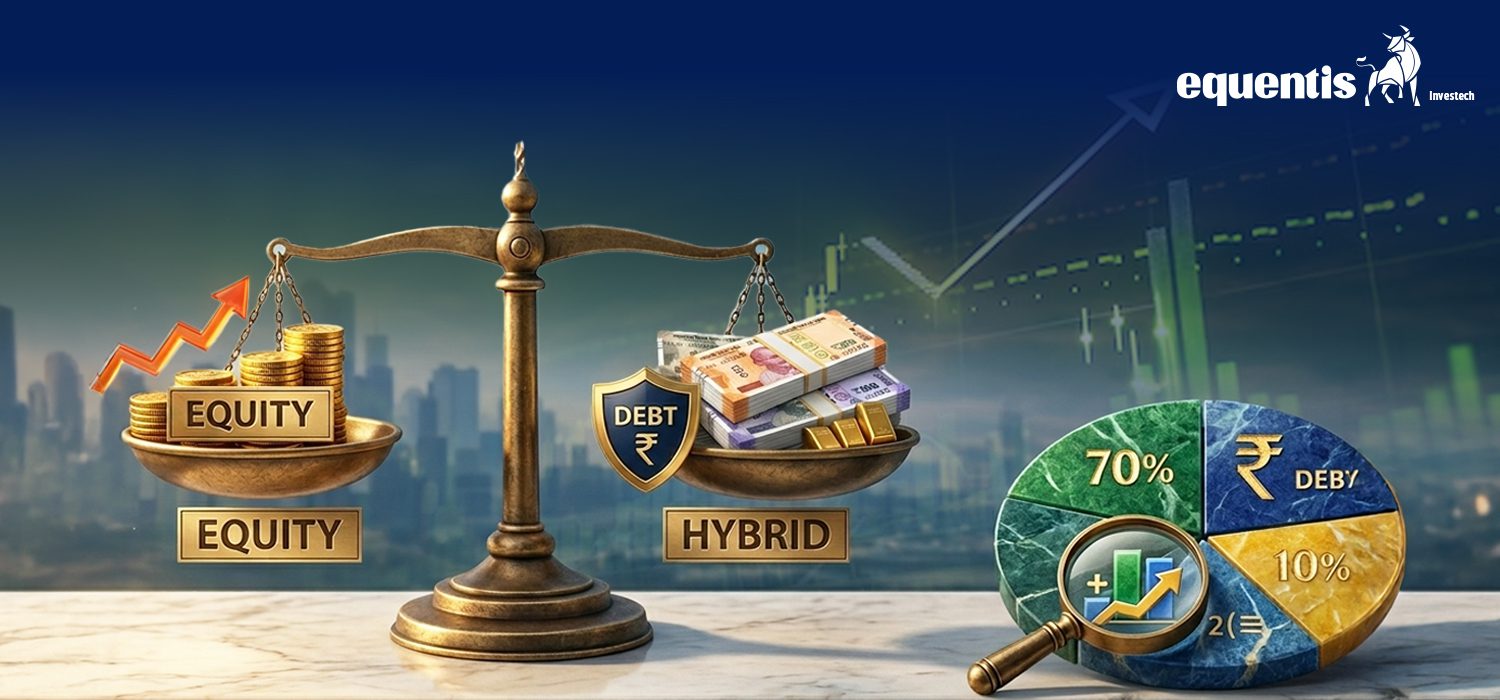
In the world of investing, success is rarely determined by choosing a single winning stock or investment. Instead, long-term wealth creation is largely driven by how investors allocate their assets across different investment categories.
As financial markets evolve and economic conditions shift, investors must rethink how they distribute their money between equity, debt, and alternative investments. In 2026, asset allocation is becoming even more critical due to global economic uncertainties, changing interest rates, and rapid technological growth.
A well-structured asset allocation strategy helps investors balance risk, capture growth opportunities, and protect their wealth during market volatility.
Understanding how much to invest in equities, debt instruments, and alternative assets can help investors build a portfolio that is both resilient and growth-oriented.
What Is Asset Allocation?
Asset allocation refers to the process of dividing investments across different asset classes in order to manage risk and maximize potential returns.
The three primary asset classes investors typically consider are:
• Equity (Stocks and Equity Funds) – High growth potential but higher volatility
• Debt (Fixed Income Instruments) – Stable returns with lower risk
• Alternative Assets – Diversification and protection against market uncertainty
Each asset class behaves differently under changing market conditions. By allocating funds across multiple categories, investors can reduce the impact of market fluctuations on their overall portfolio.
In simple terms, asset allocation is the strategy that determines how your money is distributed across different investments.
Why Asset Allocation Matters in 2026
Financial markets in 2026 are influenced by several key factors:
• Rapid technological innovation
• Global economic shifts
• Changing interest rate cycles
• Inflationary pressures
• Growing access to international investments
Because of these factors, relying on a single asset class can expose investors to unnecessary risk.
A balanced asset allocation strategy helps investors:
• Reduce portfolio volatility
• Capture growth from multiple sectors
• Protect capital during economic downturns
• Maintain stable long-term returns
This approach ensures that investments remain aligned with financial goals and market conditions.
Equity Allocation: The Growth Engine
Equities remain one of the most powerful tools for long-term wealth creation. Over long periods, stock markets have historically outperformed most other asset classes.
In 2026, equities continue to play a crucial role in investment portfolios because they provide:
• Capital appreciation
• Exposure to economic growth
• Long-term compounding opportunities
Equity investments may include:
• Direct stocks
• Equity mutual funds
• Exchange-traded funds (ETFs)
• Index funds
However, equities are also more volatile than other asset classes, which means investors must carefully determine the appropriate allocation.
Recommended Equity Allocation in 2026
For many investors, equity allocation typically ranges between:
50% to 70% of the total portfolio
The exact percentage depends on factors such as:
• Investment horizon
• Risk tolerance
• Financial goals
Younger investors with longer time horizons often allocate a higher percentage to equities, while conservative investors may reduce equity exposure to limit volatility.
Debt Allocation: Stability and Income
Debt investments provide stability within a portfolio. These instruments generally offer predictable returns and lower risk compared to equities.
Debt investments include:
• Government bonds
• Corporate bonds
• Fixed deposits
• Debt mutual funds
• Treasury bills
In times of market uncertainty, debt instruments can help protect capital and provide steady income.
Debt investments also play an important role in balancing portfolios during equity market downturns.
Recommended Debt Allocation in 2026
Most balanced portfolios allocate approximately:
20% to 35% to debt instruments
Debt allocation depends on the investor’s need for stability and income.
For example:
• Conservative investors may allocate 35% or more to debt
• Aggressive investors may limit debt exposure to 20% or less
Debt assets help reduce volatility and ensure liquidity when needed.
Alternative Investments: Diversification and Protection
Alternative assets are gaining popularity among investors seeking diversification beyond traditional equity and debt investments.
These assets often behave differently from stock markets, which helps reduce overall portfolio risk.
Common alternative investments include:
• Gold
• Real estate investment trusts (REITs)
• International equities
• Commodities
• Infrastructure funds
Gold, for example, is widely used as a hedge against inflation and currency fluctuations.
Meanwhile, international investments allow investors to benefit from growth in global markets.
Recommended Alternative Allocation in 2026
Alternative investments usually account for:
5% to 15% of the total portfolio
This allocation helps improve diversification without introducing excessive risk.
Many investors allocate:
• 5–10% to gold
• 5–10% to international or thematic investments
Alternative assets can act as shock absorbers during periods of market volatility.
Sample Asset Allocation Portfolio for 2026
A balanced investment portfolio in 2026 may look like this:
Equity: 60%
• Large-cap stocks or funds
• Index funds
• Sector funds
Debt: 25%
• Government bonds
• Debt mutual funds
• Fixed deposits
Alternatives: 15%
• Gold ETFs or sovereign gold bonds
• International equity exposure
• REITs or infrastructure funds
This structure provides a combination of growth, stability, and diversification.
How Age Influences Asset Allocation
Asset allocation should also change depending on an investor’s age and financial stage.
Investors in Their 20s and 30s
Younger investors typically have longer investment horizons and can tolerate higher volatility.
Typical allocation:
• 70% Equity
• 20% Debt
• 10% Alternatives
Investors in Their 40s and 50s
At this stage, investors begin balancing growth with risk management.
Typical allocation:
• 60% Equity
• 30% Debt
• 10% Alternatives
Investors Near Retirement
Investors approaching retirement generally prioritize capital protection.
Typical allocation:
• 40–50% Equity
• 40% Debt
• 10–15% Alternatives
This approach reduces risk while maintaining some exposure to growth assets.
Importance of Periodic Portfolio Rebalancing
Over time, market movements may cause asset allocations to drift from their original targets.
For example, a strong equity rally could increase the equity portion beyond the intended allocation.
Rebalancing helps investors:
• Maintain target allocations
• Lock in gains from outperforming assets
• Reduce exposure to overvalued investments
• Maintain disciplined investment strategies
Financial experts often recommend reviewing and rebalancing portfolios once or twice a year.
Final Thoughts
Asset allocation remains one of the most important factors in successful investing. Rather than relying on individual investment picks, investors should focus on building diversified portfolios that balance growth, stability, and risk management.
In 2026, a thoughtful combination of equity, debt, and alternative assets can help investors navigate market uncertainties while capturing long-term opportunities.
By aligning asset allocation with personal financial goals, risk tolerance, and investment horizon, investors can create portfolios designed to grow steadily across changing economic cycles.
A disciplined asset allocation strategy ensures that wealth is not only built—but also protected and sustained for the future.