Introduction
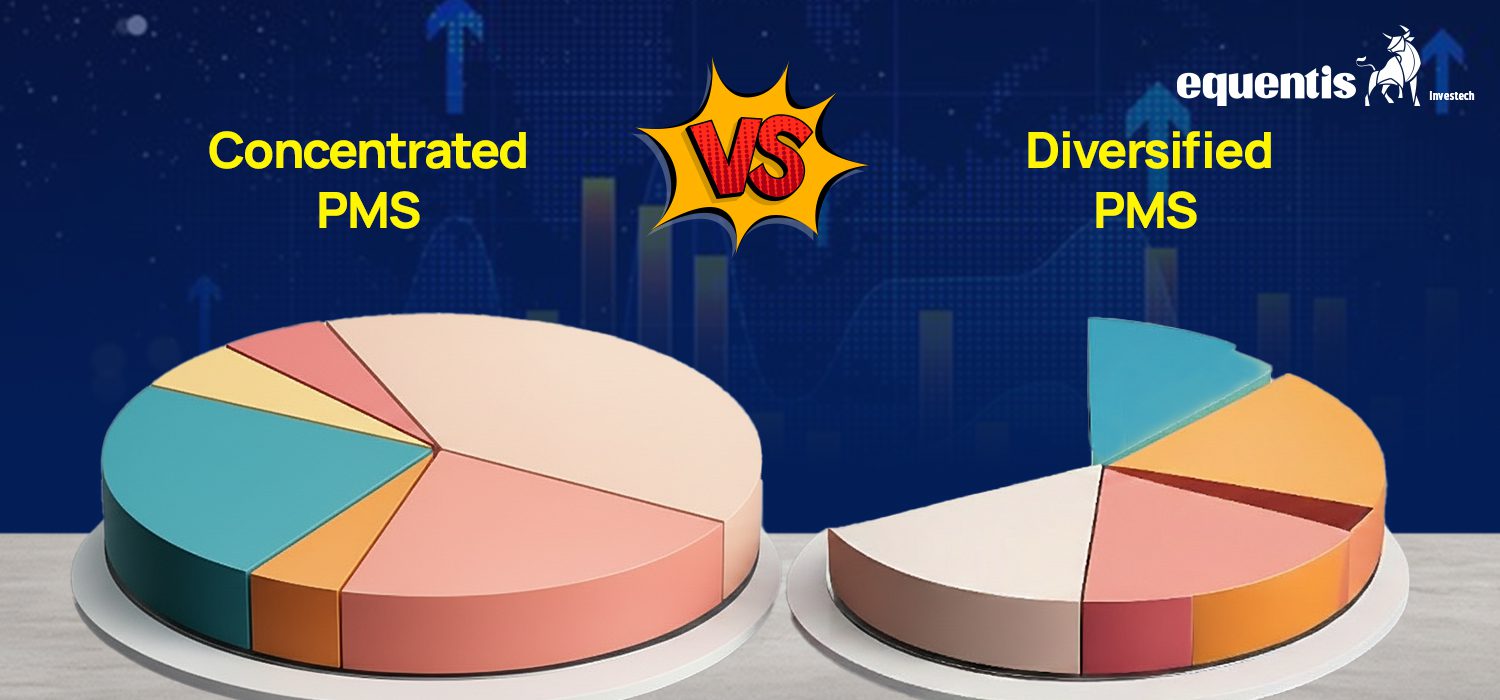
When it comes to Portfolio Management Services or PMS, one of the biggest strategic decisions investors face is choosing between a concentrated portfolio and a diversified portfolio. Both approaches aim to generate wealth, but they follow very different paths.
Some investors prefer high conviction bets in a limited number of stocks. Others feel more comfortable spreading their capital across multiple sectors and companies to reduce risk.
So which strategy works better?
The answer is not universal. It depends on your risk appetite, investment horizon, and belief in fund manager expertise. In this blog, we will break down concentrated vs diversified PMS strategies in detail so you can understand how each works and which might suit you better.
What Is a Concentrated PMS Strategy?
A concentrated PMS strategy typically holds a limited number of stocks, often between 10 to 20. The idea is simple. If the fund manager has strong conviction in certain businesses, allocating more capital to fewer ideas can generate superior returns.
Instead of spreading money thinly across 40 or 50 stocks, the portfolio focuses deeply on selected companies with high growth potential.
Key Features of Concentrated PMS
- 10 to 20 stocks typically
- Higher allocation per stock
- High conviction investing
- Strong focus on quality and growth
- Potential for higher alpha generation
How It Works
In a concentrated PMS, if the fund manager identifies 12 strong companies with long term potential, each company might receive 5 to 12 percent allocation. If these companies perform well, the overall portfolio return can be significant.
However, if one or two major holdings underperform sharply, it can impact the entire portfolio meaningfully.
What Is a Diversified PMS Strategy?
A diversified PMS strategy spreads investments across a larger number of stocks, typically 25 to 40 or even more. The goal is to reduce stock specific risk while still participating in market growth.
This approach follows the classic principle of diversification. Do not put all your eggs in one basket.
Key Features of Diversified PMS
- 25 to 40 plus stocks
- Lower allocation per stock
- Reduced company specific risk
- Exposure across multiple sectors
- More stable return pattern
How It Works
In a diversified PMS, the fund manager invests in multiple sectors and themes. Even if a few stocks underperform, the impact is cushioned because no single stock dominates the portfolio.
This approach often delivers smoother performance over time, especially during volatile market phases.
Risk Comparison: Which Is Riskier?
Risk is where the real difference lies.
Concentrated PMS Risk Profile
- Higher volatility
- Larger drawdowns possible
- Performance highly dependent on top holdings
- Requires strong conviction and patience
If the top 3 holdings fall sharply, portfolio returns can suffer significantly. This makes concentrated PMS suitable for investors who can tolerate short term fluctuations.
Diversified PMS Risk Profile
- Lower volatility compared to concentrated
- Reduced impact of individual stock failure
- More stable downside protection
Diversification reduces unsystematic risk. However, it does not eliminate market risk completely.
In simple terms, concentrated PMS amplifies both gains and losses. Diversified PMS smoothens the journey.
Return Potential: Which Can Deliver Higher Returns?
This is the most debated aspect.
Concentrated PMS Return Potential
Because capital is allocated heavily to high conviction ideas, concentrated portfolios have the potential to outperform significantly if the stock selection is accurate.
Many legendary investors globally have built wealth through concentrated investing.
However, the reverse is also true. Poor stock selection can lead to sharp underperformance.
Diversified PMS Return Potential
Diversified PMS may not always generate extraordinary short term gains. But over long periods, it can deliver consistent compounding with lower stress.
It sacrifices extreme upside potential in exchange for stability.
So if you are chasing high alpha and believe strongly in fund manager skill, concentrated PMS may appeal more. If you value steady compounding, diversification may be better.
Market Conditions and Strategy Performance
Market cycles play an important role.
During Bull Markets
In strong bull runs where a few sectors outperform massively, concentrated PMS can shine. If the portfolio is aligned with the winning sectors, returns can be exceptional.
During Bear Markets
In falling markets, concentrated portfolios may witness sharper drawdowns. Diversified portfolios often hold up relatively better because exposure is spread.
During Sideways Markets
In range bound markets, diversified portfolios often provide better risk adjusted returns due to broader participation.
Timing matters. Strategy suitability can change with market phases.
Who Should Choose Concentrated PMS?
A concentrated PMS strategy may suit you if:
- You have high risk tolerance
- You can stay invested for 5 to 7 years or more
- You trust the fund manager’s stock picking ability
- You are comfortable with short term volatility
- You seek potentially higher long term alpha
This strategy requires emotional discipline. Temporary underperformance should not trigger panic exits.
Who Should Choose Diversified PMS?
A diversified PMS strategy may suit you if:
- You prefer moderate risk
- You want smoother portfolio movement
- You value stability over extreme returns
- You are relatively new to PMS investing
- You want balanced sector exposure
Diversification provides psychological comfort. It reduces stress during volatile markets.
Cost Considerations
Both concentrated and diversified PMS strategies usually have similar fee structures. However, performance fees can feel different depending on volatility.
In concentrated portfolios, performance fees may fluctuate more because returns fluctuate more. In diversified portfolios, performance tends to be steadier.
Always evaluate:
- Management fees
- Performance fees
- Hurdle rate
- Exit load conditions
Fees can impact long term compounding significantly.
Real World Example Illustration
Let us assume two PMS strategies each investing 1 crore rupees.
Scenario 1
Concentrated PMS invests in 15 stocks. Three stocks deliver 50 percent growth in a year. The portfolio return may surge sharply because allocations are higher.
Scenario 2
Diversified PMS invests in 35 stocks. The same three stocks are included but at lower weight. The portfolio gains, but not as dramatically.
Now imagine if those three stocks fall 40 percent instead. The concentrated portfolio feels deeper pain. The diversified portfolio experiences a milder impact.
This example shows the double edged nature of concentration.
Psychological Factor in Decision Making
Investing is not only about mathematics. It is also about behavior.
Many investors choose concentrated strategies during bull markets when returns look impressive. But during corrections, they struggle emotionally and exit at the wrong time.
Diversified portfolios often help investors stay invested because fluctuations are less extreme.
Your temperament matters as much as the strategy itself.
Can You Combine Both Approaches?
Yes, and many investors do exactly that.
You can allocate part of your capital to a concentrated PMS for higher alpha generation and part to a diversified PMS for stability.
This blended approach offers:
- Growth potential
- Risk balance
- Emotional comfort
- Strategic flexibility
Asset allocation across strategies can sometimes be more powerful than choosing one over the other.
Performance Evaluation Metrics
When comparing concentrated vs diversified PMS strategies, look beyond raw returns.
Evaluate:
- Risk adjusted return
- Standard deviation
- Maximum drawdown
- Sharpe ratio
- Portfolio turnover
Higher returns with extremely high volatility may not suit every investor.
Always assess performance over full market cycles, not just one good year.
Common Myths
Myth 1: Concentrated Always Means Better Returns
Not necessarily. Concentration magnifies both right and wrong decisions.
Myth 2: Diversified Means Low Returns
Diversified portfolios can still generate strong long term returns, especially when managed actively.
Myth 3: More Stocks Means No Risk
Diversification reduces company specific risk, but market risk always remains.
Final Verdict: Which Works Better?
There is no absolute winner between concentrated vs diversified PMS strategies.
Concentrated PMS works better when:
- The fund manager has strong stock picking ability
- Market conditions favor high conviction themes
- The investor has high risk appetite
Diversified PMS works better when:
- Stability is a priority
- Market conditions are uncertain
- The investor prefers smoother returns
The right strategy depends on your financial goals, investment horizon, and emotional resilience.
Before investing, ask yourself:
Can I handle 20 to 30 percent temporary decline without panic?
Do I prioritize aggressive growth or stable compounding?
Do I fully understand the risk profile of the strategy?
Clarity on these questions will guide your decision better than chasing recent returns.
Conclusion
Concentrated and diversified PMS strategies represent two distinct philosophies of investing. One focuses on conviction and potential outperformance. The other emphasizes balance and risk management.
Neither is universally superior. Both can create wealth when aligned with the right investor profile.
The real key lies in matching the strategy with your personal financial blueprint. When strategy and temperament align, long term investing becomes significantly more powerful.
If you are evaluating PMS options today, take time to understand not just past performance but also portfolio structure and risk exposure.
Because in investing, how you earn returns matters as much as how much you earn.