For years, advertising followed a relatively simple formula.
Create one campaign.
Choose a target audience.
Put the campaign in front of as many relevant people as possible.
But audiences are no longer that simple.
A 22-year-old discovering a skincare brand on Instagram does not necessarily respond to the same message as a 42-year-old who has been comparing products for three weeks. Someone watching a finance video on YouTube may need education, while another person searching for a specific financial product may be ready to take action.
The audience may be interested in the same brand, but their reasons for paying attention can be completely different.
This is where hyper-personalised advertising is changing the way brands think about creative.
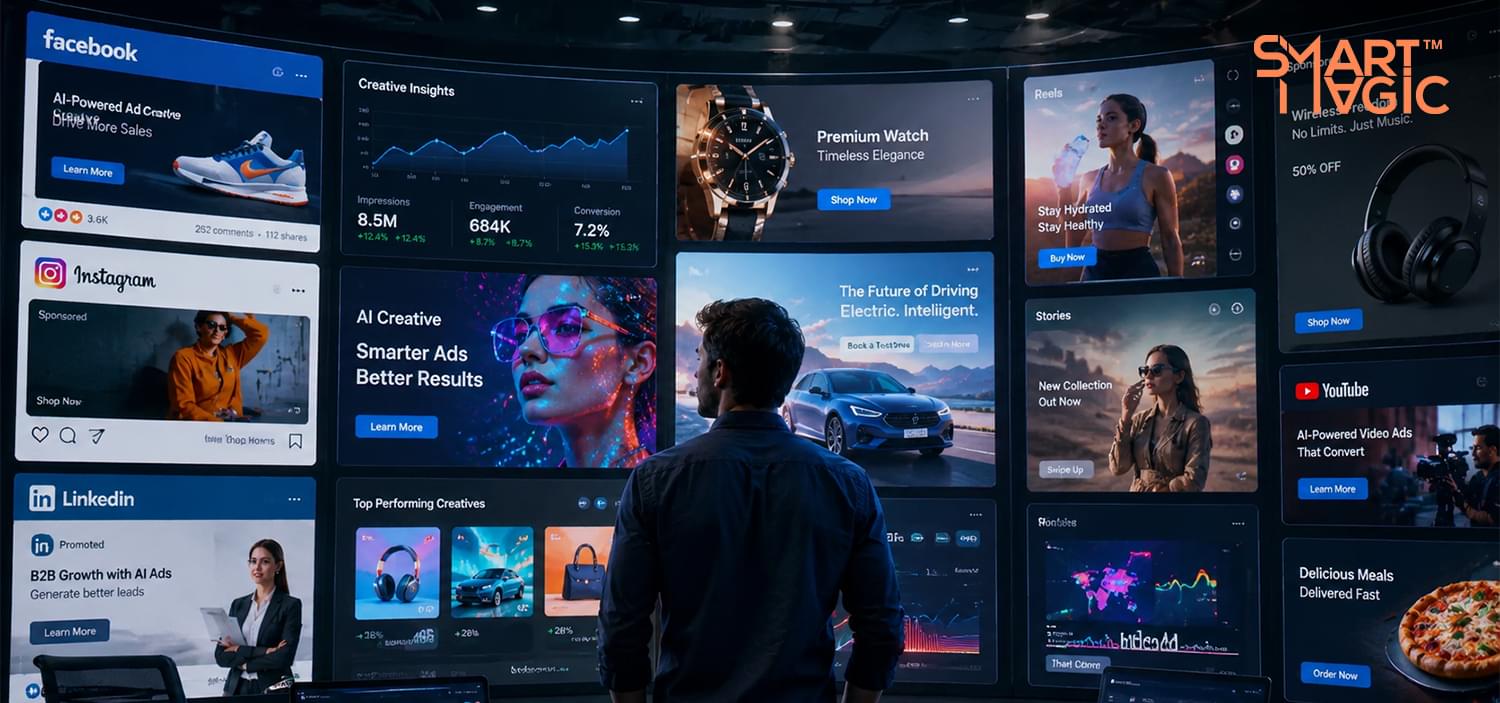
With artificial intelligence, brands can now create different versions of an advertisement based on audience characteristics, behaviour, interests, platform, location and even where a person is in the customer journey.
The real opportunity is not simply creating more ads.
It is creating more relevant ads without multiplying the production workload.
What Is Hyper-Personalised Advertising?
Hyper-personalised advertising is the use of data, artificial intelligence and automation to deliver advertising content that is highly relevant to a specific audience segment or individual context.
Traditional advertising might say:
“Our new running shoes are here.”
A more personalised campaign could communicate different reasons to care.
For a beginner:
“Starting your running journey? Meet your everyday running companion.”
For an experienced runner:
“Built for your next long-distance run.”
For someone who has already visited the product page:
“Still thinking about them? Your next run could start here.”
The product has not necessarily changed.
The creative message has.
AI makes it possible to develop and manage these variations at a scale that would have been extremely difficult to achieve manually.
Why One Ad No Longer Works for Everyone
Consumers interact with brands across multiple platforms and multiple stages of the buying journey.
Someone may first see a brand on Instagram, watch a product video on YouTube, visit the website through Google, compare reviews and finally make a purchase after seeing a retargeting advertisement.
Every interaction creates context.
Yet many brands continue to show the same creative to everyone.
That creates a disconnect.
A first-time viewer may need to understand what the brand does.
A returning visitor may need a reason to trust it.
A customer who has already purchased may need a completely different message altogether.
Hyper-personalisation attempts to solve this problem by making the creative reflect the audience’s context.
AI Changes the Economics of Creative Production
Historically, creating multiple versions of an advertisement required significantly more resources.
Different scripts meant more writing.
Different visuals meant more shoots.
Different formats meant more editing.
Different languages meant more production.
If a campaign needed 20 creative variations, the production requirements could quickly become expensive and time-consuming.
AI changes this equation.
A core campaign can be developed first, followed by multiple variations for different audiences.
The same campaign could potentially have different:
- Headlines
- Scripts
- Voiceovers
- Visual treatments
- Product focuses
- Calls to action
- Languages
- Aspect ratios
- Offers
- Opening hooks
Instead of producing one advertisement and hoping it works everywhere, brands can build a creative system designed to adapt.
From One Campaign to Hundreds of Creative Variations
Imagine a consumer electronics brand launching a new pair of wireless headphones.
Instead of creating one generic advertisement, the brand could create different creative versions.
For fitness audiences
The focus could be sweat resistance, stability and workouts.
For commuters
The message could focus on noise cancellation and long battery life.
For gamers
The creative could highlight low latency and immersive sound.
For professionals
The advertisement could focus on calls, productivity and concentration.
For existing customers
The message could introduce the product as an upgrade from an earlier model.
The underlying brand identity remains consistent.
But the reason for buying changes.
This is where AI becomes particularly powerful.
It can help brands generate, adapt, test and optimise creative variations without requiring every version to start from zero.
Personalisation Is Not Just About Changing the Name
There is a common misconception that personalisation means inserting someone’s name into an advertisement.
That is basic personalisation.
Hyper-personalisation goes much further.
It asks:
What does this particular audience care about?
For example, a travel company could promote the same destination differently to different people.
A young couple might see an advertisement focused on experiences and nightlife.
A family might see activities, safety and convenience.
A luxury traveller might see premium accommodation and exclusive experiences.
A solo traveller might see independence, exploration and local experiences.
The destination remains the same.
The story around the destination changes.
That distinction is important because people do not buy products simply because products exist.
They buy products because those products solve a problem, create an emotion or help them achieve something they care about.
AI Can Make Video Advertising More Adaptive
Video is particularly interesting in this space.
A single master video can potentially become the foundation for multiple creative executions.
The opening five seconds can change depending on the audience.
The voiceover can change.
The language can change.
The product benefit can change.
The call to action can change.
Even the sequence of information can change.
For example, a home loan campaign could speak differently to a first-time homebuyer than to someone looking to upgrade their existing home.
The first audience may respond to:
“Your first home is closer than you think.”
The second may respond to:
“Ready to move into a home that fits your next chapter?”
The product category is identical.
The audience motivation is not.
AI allows creative teams to build these differences into the campaign rather than treating them as separate campaigns from the beginning.
The Role of Data in Hyper-Personalised Advertising
AI does not create effective personalisation simply by generating more content.
It needs meaningful inputs.
Brands can use signals such as:
- Demographics
- Location
- Purchase behaviour
- Website interactions
- Content consumption
- Previous engagement
- Product interests
- Platform behaviour
- Customer lifecycle stage
- Campaign performance
These signals can help marketers identify patterns.
For example, if one audience consistently responds to educational content while another responds to offers, the creative strategy can reflect that difference.
This creates a feedback loop.
Audience behaviour → Creative variation → Performance data → Optimisation → Better creative
Over time, advertising becomes less dependent on assumptions and more informed by actual audience behaviour.
But More Personalisation Does Not Automatically Mean Better Advertising
There is an important catch.
Creating 500 versions of an advertisement does not mean creating 500 good advertisements.
AI can generate content quickly.
That does not automatically make the content strategic, emotional or culturally relevant.
Poorly executed personalisation can actually make advertising feel robotic.
The biggest challenge for brands will therefore be finding the balance between automation and human creativity.
AI can help generate variations.
Human creative teams still need to decide:
What is the central idea?
What should the brand sound like?
What emotion should the campaign create?
Which audience insight is worth building the story around?
What should never change across the campaign?
Technology can multiply creative possibilities.
It cannot replace the need for a strong creative idea.
The Future Is Not One Ad for Everyone
The future of advertising may look less like creating a single perfect advertisement and more like building a flexible creative ecosystem.
Instead of asking:
“What is our ad?”
Brands may increasingly ask:
“What is our core idea, and how should that idea change for different people?”
This is a significant shift.
The campaign remains consistent.
The brand remains recognisable.
But the execution becomes more responsive.
One audience may see a 15-second Reel.
Another may see a six-second YouTube bumper.
Someone else may receive a product-focused carousel.
A returning visitor may see a testimonial.
An existing customer may see an upgrade message.
The technology connecting these experiences is becoming increasingly sophisticated.
What This Means for Creative Production Companies
For production companies, AI is not simply another tool for generating visuals.
It changes how campaigns can be planned from the beginning.
A modern production workflow can potentially consider multiple audience segments before the camera even starts rolling.
Instead of asking only:
“How do we make this film?”
Creative teams can ask:
“How many versions of this idea could we create from the same production ecosystem?”
This could influence scripting, shooting, editing, motion graphics, voiceovers and post-production.
The result is a production model where one strong creative concept can generate a much larger content ecosystem.
For brands working across Instagram, YouTube, LinkedIn, Meta and other digital platforms, that flexibility can become extremely valuable.
The Human Idea Still Comes First
There is a temptation to think AI will eventually make advertising completely automated.
But advertising has always been about understanding people.
Technology can identify patterns.
Technology can create variations.
Technology can optimise delivery.
But the fundamental creative question remains human:
Why should someone care?
The strongest hyper-personalised campaigns will therefore not be the ones with the most variations.
They will be the ones where every variation still feels like it came from the same strong idea.
That is the real opportunity.
AI can help brands move from one message for millions of people to one powerful idea expressed in millions of relevant ways.
And as audiences become more fragmented, platforms become more competitive and attention becomes harder to earn, that ability to make advertising feel more relevant at scale could become one of the biggest advantages a brand can have.
Final Thoughts
Hyper-personalised advertising is not about replacing creativity with algorithms.
It is about giving creativity more room to adapt.
AI can help brands produce more versions, test more messages, understand audience responses and personalise campaigns at a scale that traditional production models could rarely support.
But the winning formula will still depend on the same fundamentals that have always made advertising work:
A strong idea.
A clear audience insight.
A compelling story.
And a reason for people to care.
At Smart Magic Productions, the opportunity lies in bringing those fundamentals together with emerging AI-powered production and creative technologies. As advertising moves towards greater personalisation, brands will need production partners who can think beyond a single film and build creative systems designed for different audiences, platforms and moments.
Because the future of advertising may not belong to the brand with the loudest message.
It may belong to the brand that knows which message to show, to whom, and when.